Dear MMTA Members,
I am penning this you just before I go off to the annual Zero Project Conference at the UN in Vienna. This year’s theme is: Accessibility, Information and Communication Technology (ICT) and Crisis Response. And over the past several months I have been helping produce a groundbreaking report entitled “Disability Inclusive Crisis Response”. (For example, how do you signal an emergency that can understood by someone who cannot see, or someone who cannot hear or who may not have the intellectual capacity easily to understand? And that’s just one of the myriad problems!)
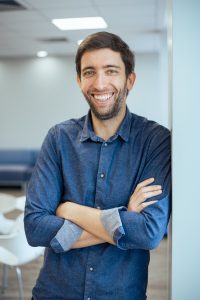
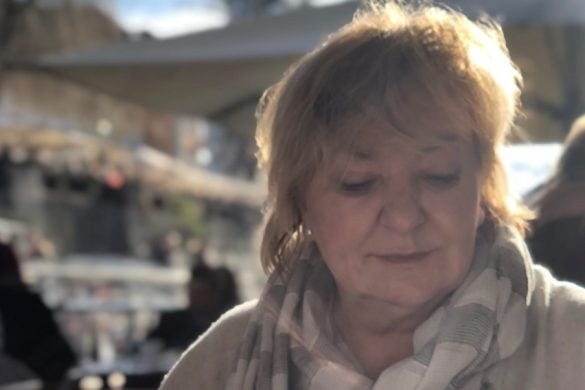
Guilherme Braga, Founder/CEO Egalite
Anyway, in this missive, on the theme of accessibility, I am going to report on a chat I had with one of this year’s Zero Project Innovative Solutions Awardees—Guilherme Braga, Founder and CEO of Egalite, based in Porto Alegre, Brazil.
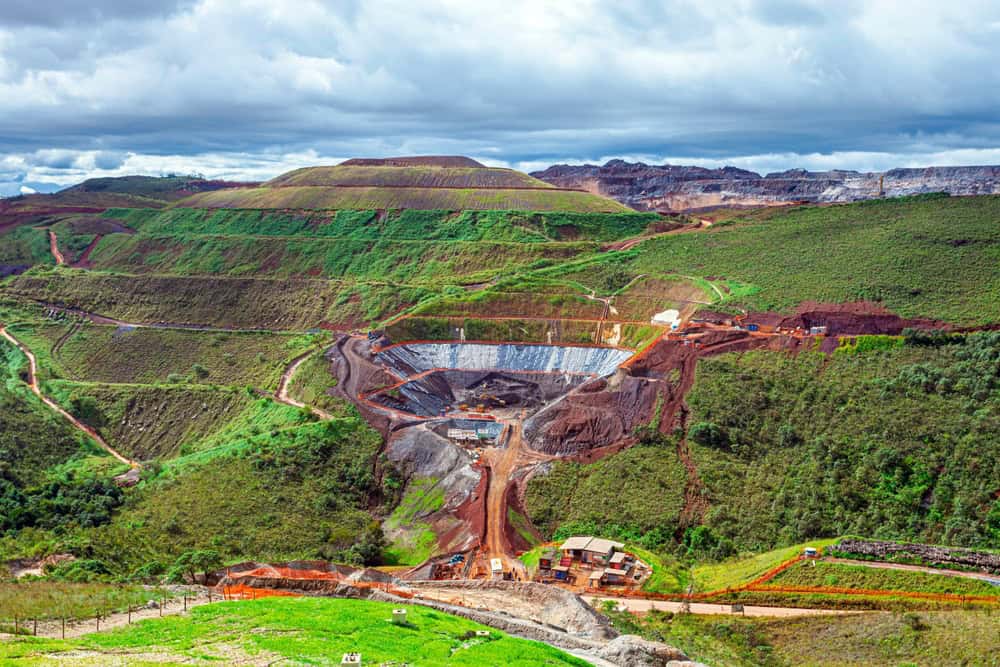
In a project spanning some 18 months, Gui and his team at Egalite helped Vale in Brazil increase the accessibility of its operations. A really interesting and, perhaps, surprising project: Mines? Accessible?
(The interview that follows has been edited for length and clarity. And one proviso around my conversation with Gui is that what he could say about his work with Vale was governed by quite a strict NDA.)
Tom Butcher (TB) Am I right that Egalite helped Vale increase the accessibility of its mining operations and, thereby, potentially increase the employment opportunities for persons with disabilities?
Guilherme Braga (GB) Yes, Tom, this was an amazing challenge for us. In the past we have done accessibility analyses, but going inside one of the biggest mining operations in Brazil was something absolutely amazing. Vale is a very inclusive company.
Here in Brazil, we have a quota law that requires company with over 1,000 employees to have 5% of disabled workers. And Vale is one of the few very large corporations, with complex operations, that is actually complying to the law.
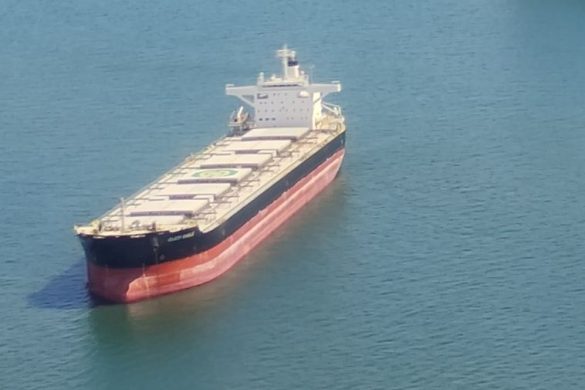
It was amazing to think about putting people with disabilities not only in its offices, but also anywhere else inside the com-pany. So besides its mining operations, we looked at its logistics operations. We also looked its railway operations and the port/island it owns in Rio. [the Guaíba Island Terminal (TIG) located in Mangaratiba.] We went to all these sites to help them become both more accessible and inclusive.
TB How did you approach and go forward with the project?
GB This went beyond just an accessibility audit. The main goal of the project was to think about the future of work in Vale. Many of its mining operations are changing and becoming automated. They’re using robots and everything is evolving a great deal.
The company wanted not only to address the question What can we make better for people with disabilities who are working for us now, but also, how do we prepare these people for the future?
We did an accessibility audit, but we also went through a job “evaluation” process. For every job, we wanted really to un-derstand the role, what was needed for accessibility and to see what were the adaptations necessary for each different kind of disability. So that, having done this, the company could go through and see, for example, where it could pro-mote a person with a disability. Vale would know exactly what it would need to do to make the job accessible.
Part of its strategic plan was really to think about how it could not only recruit, but also promote people with disabilities. And, besides this, there was an upskilling and reskilling plan. I.e., thinking about the new jobs that it will create in the future.
TB Was your help across all operations, or only certain operations?
GB We visited the most important operations. In addition to the operations I’ve mentioned, we also visited lab and mineral exploration sites.
TB Where did you find it easiest to present solutions?
GB When we did the audit and looked at the operations, if we grouped what needed to be done, there were definitely 10 main things that needed to be done across these operations that were the same.
Honestly, when we talk about creating an accessible mining site for a person in a wheelchair, this is very complex. But there were many other activities that could be improved for different kinds of disabilities. But definitely, I would say that we were very impressed by how we could make reasonable accommodations in mining operations. This was something we thought would be much more complex. But it turned out to be possible.
TB Where did you find the problems most intractable?
GB The port operation was very complex. And, in addition, there were all the maritime regulations involved. These last exclude persons with many kinds of disability. So it was not confined just to adaptations.
TB Looking at your experience working for Vale, did you identify any “dos” or “don’t” that could help a mining company seeking to make its operations more accessible.
GB Yes: one of the parts of the project was listening to people with disabilities at Vale’s operations and their leaders. We got a lot of insights from that. I think it’s a great thing. So, definitely do that. Listening is very important.
Understand, from the start, that you can employ a person with a disability. You can do so with safety and have great results. So, “do” employ a person with a disability. Another “do” is to listen to their needs. A lot of times there are very simple accommodations that make a huge difference to these people.
In our experience, often they just didn’t know how to ask for them. And when we got there and identified them, they were things that were at almost at no cost for a company like Vale.
Definitely another “do” is getting proper help to make the accommodations. It’s very important to plan ahead. If you think accessibility from the start, it’s very easy to make changes. Retrofitting is not.
A definite “don’t” is don’t think it is impossible. I believe Vale has around 1,500 persons with disabilities working for it in Brazil, 90% in operations. So, it’s definitely possible.
Another is, don’t raise barriers. There are a lot of different processes in a job and not everyone is familiar with people with disabilities. And they assume a person won’t be able to do something. They never ask, they never talk to that person to find out. If they can do it, you can’t put up barriers where there should not be any.
TB Did this project provide any revelations?
GB Yes! Honestly, I never thought Vale would have as many people with disabilities in their operations as they do.
This was something really amazing. And going inside the op-erations and talking to people. They really enjoyed their jobs.
They were really happy about the opportunity that they had been given. And some of these operations were at very remote sites in Brazil.
TB What would be your call to action for mining companies who want to employ persons with disabilities?
GB Employ people with disabilities! There are definitely many ways they can do it. You have to start. If you don’t, you are losing a lot of possibilities, a lot of great workers and missing out on gaining a different perspective for your business.
Gui and his team did some amazing work with Vale. His descriptions certainly have me thinking. Quite apart from the twin requirements of listening and, when planning, thinking accessibility ab initio, what came out loud and clear is, first, that, even in the mining industry, accessibility is possible and, second, that the required accommodations and adaptations need not be prohibitively expensive.
I hope you have enjoyed just this very quick look at what actually can be (and has been) achieved on the accessibility front in one of the largest mining companies in the world. I started out being skeptical about the whole concept, but finished as a believer!
Next month, I’ll look at what’s going at Darpa here in the US. There’s some quite interesting stuff.
In the meantime, though, from Cleveland Heights here in Ohio, I remain, as always,
Yours
Tom
©2026 Tom Butcher
MMTA North America correspondent

Learn more about Egalite at www.egalite.com.br