 Not yet plain sailing
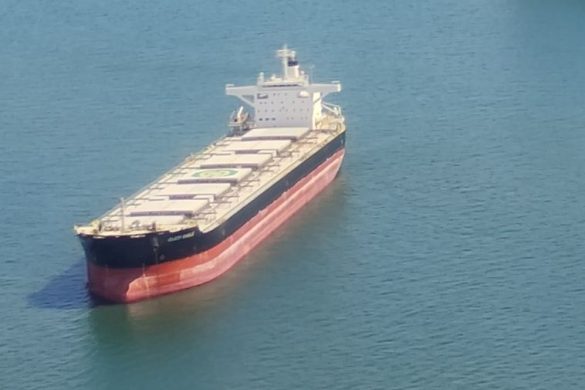
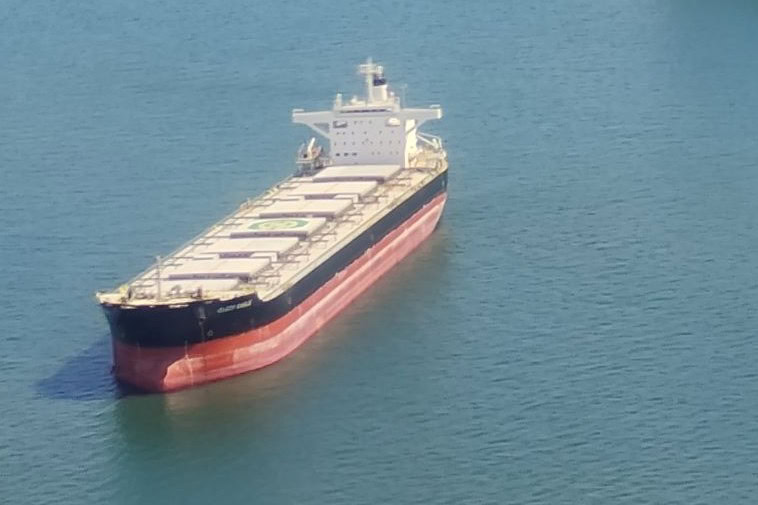
As this issue went to press, the first French and Saudi tankers carrying crude oil were reported to have crossed the Strait of Hormuz after President Trump signed an agreement in Versailles at the G7 summit to reopen the strait and wind down the war with Iran.
The 14 point memorandum of understanding, along with cessation of hostilities and commitment to respect each other’s territorial integrity, commits the two sides to negotiating a final deal, envisaged within 60 days with US removing its navy blockade within 30 days of signing and Iran within 30 days of the final deal.
In this issue OnG Commodities looks a the impact of the blockade on the supply chain for helium needed for semiconductor manufacture, which in turn impacts electronic metals. Even if the conflict ended and the strait was opened and all mines were removed immediately, aftershocks continue to reverberate. Despite the wording of the agreement, there were some mixed reports on whether Iran will let ships pass without charge.
The US-Iran MoU sets out work towards a “broader agreement” that would guarantee free passage through the strait. The agreement commits Iran to nuclear weapons non-proliferation and lifts US sanctions on Iran, breaking with UN sanctions, and committing US$300bn to Iran reconstruction.
Free trade or future tariffs?
All eyes are still on the US for the future or tariffs. While President Trump returned with positive rhetoric on stabilising relations from a summit with China’s President Xi, there was not yet a trade agreement, tariffs and export controls remain in place. The Office of the US Trade Representative (USTR) has, however opened a consultation on potential lowering of tariffs, into which US companies can feed until 10th July.
On 24 July, global 10% tariffs under Section 122 of the US Trade Act are due to expire. Ahead of this June saw a flurry of activity, as the EU finally approved the deal with the US that sets duties on its steel and aluminium at 15% in exchange for the EU cutting tariffs on some US goods to 0%.
The U.S. Customs and Border Protection confirmed that it will go ahead with Phases 2 and 3 of refunding “Liberation Day” tariffs, but the process is yet unclear. On 15th June the US Supreme Court rejected a challenge to Section 301 Tariffs on Chinese goods imposed by the prior Trump administration in 2018. The current Trump administration is proposing new Section 301 Tariffs of between 10% and 12.5% on imports of goods including aluminium and polysilicon from 60 economies, including the EU, targeting forced labour, plus an extra 25% on Brazil, citing unfair trade practices. Comments on the USTR consultation are invited by 6th July 2026.